B1 - System Modeling & Digital
Process Twin: Generating Forecasts

Subproject B-1 involves developing a digital process twin of the CUBES Circle that precisely maps the biological, technical, and infrastructural processes of the pilot plant. The aim is to create a data-based model of water, nutrient, and energy flows, as well as growth and environmental exchange processes in all production modules.
Standardized models are developed, parameterized, and validated on the basis of continuous sensor and operating data. These models not only enable the current system status to be mapped, but also allow alternative operating and stress scenarios, scaling levels, and resource availability to be simulated.
The core of the work package is the systematic integration of biological production logic with AI-supported control mechanisms and energy and material flow data. This results in a high-resolution simulation tool that processes real operating data and enables predictions about process stability, cycle efficiency, and system resilience.
The digital process twin thus functions as a scientific infrastructure for the quantitative evaluation and optimization of the overall system, as well as a basis for forecasts, decision support, and scaling strategies in future urban production environments.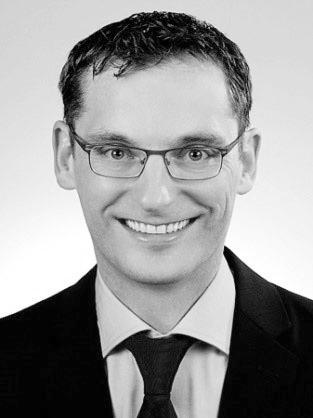
Prof. Dr.-Ing. habil Stefan Streif studied engineering cybernetics and biochemical engineering at the University of Stuttgart and University of Sheffield (UK) until 2005. In 2011, he obtained a PhD in the area of systems biology at the University Magdeburg, the Max Planck Institute for Dynamics of Complex Technical Systems in Magdeburg and at the Max Planck Institute for Biochemistry in Martinsried/Munich. After that, he became a group leader at the University of Magdeburg and he spent several years abroad, e.g. at the Massachusetts Institute of Technology. After his habilitation in systems theory and control engineering, he became an Assistant Professor at the Ilmenau University of Technology in 2014. Since 2015, he is a full professor in automatic control at the Technische Universität Chemnitz Since 2019 he fills the position dean of Faculty of Electrical Engineering and Information Technology.
The research focus of Stefan Streif’s group comprises the holistic, system theoretical treatment of (cyclic) processes, value chains and dynamic networks, the mathematical rigorous development of methods for optimal, robust and learning control as well as the analysis and verification of uncertain systems. To this end, different approaches from control theory, applied mathematics, optimization and computer science are synergistically combined, applied and further developed. The developed methods are applied in various interdisciplinary application-oriented projects ranging from agriculture, food production, and energy systems to systems biology. In addition to a solid method-oriented and theoretically well-founded research, applications and interdisciplinary projects in the areas of agricultural and energy systems, automation engineering and systems biology are of importance.
The research group currently comprises three postdocs, twelve PhD students and further technical and administrative personnel. Modern research equipment from the energy- and agricultural sectors can be found in the lab and are used to address different research questions. The IT infrastructure is used for computationally intensive research projects in the area of modeling, optimization and ‘Big Data’-analysis.
Contact: stefan.streif(at)etit.tu-chemnitz.de
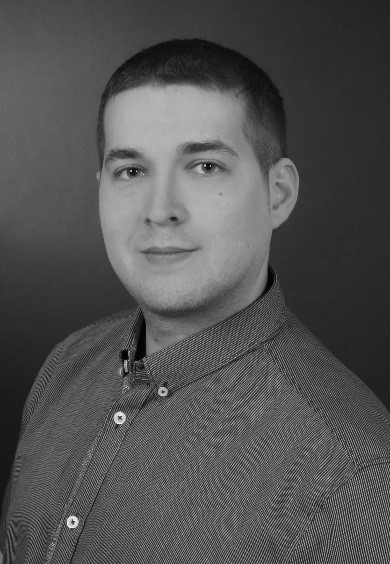
Alexander Kobelski is a scientific staff at the Chair of Automatic Control and System Dynamics. His research focuses on the development of control engineering models as well as control algorithms for the control of biological systems.
In CUBES Circle, he develops mathematical models of the individual CUBES and the ConnectivitySystem as well as control algorithms for the optimal exchange of mass and energy fluxes between the CUBES.
Contact: alexander.kobelski(at)etit.tu-chemnitz.de
